
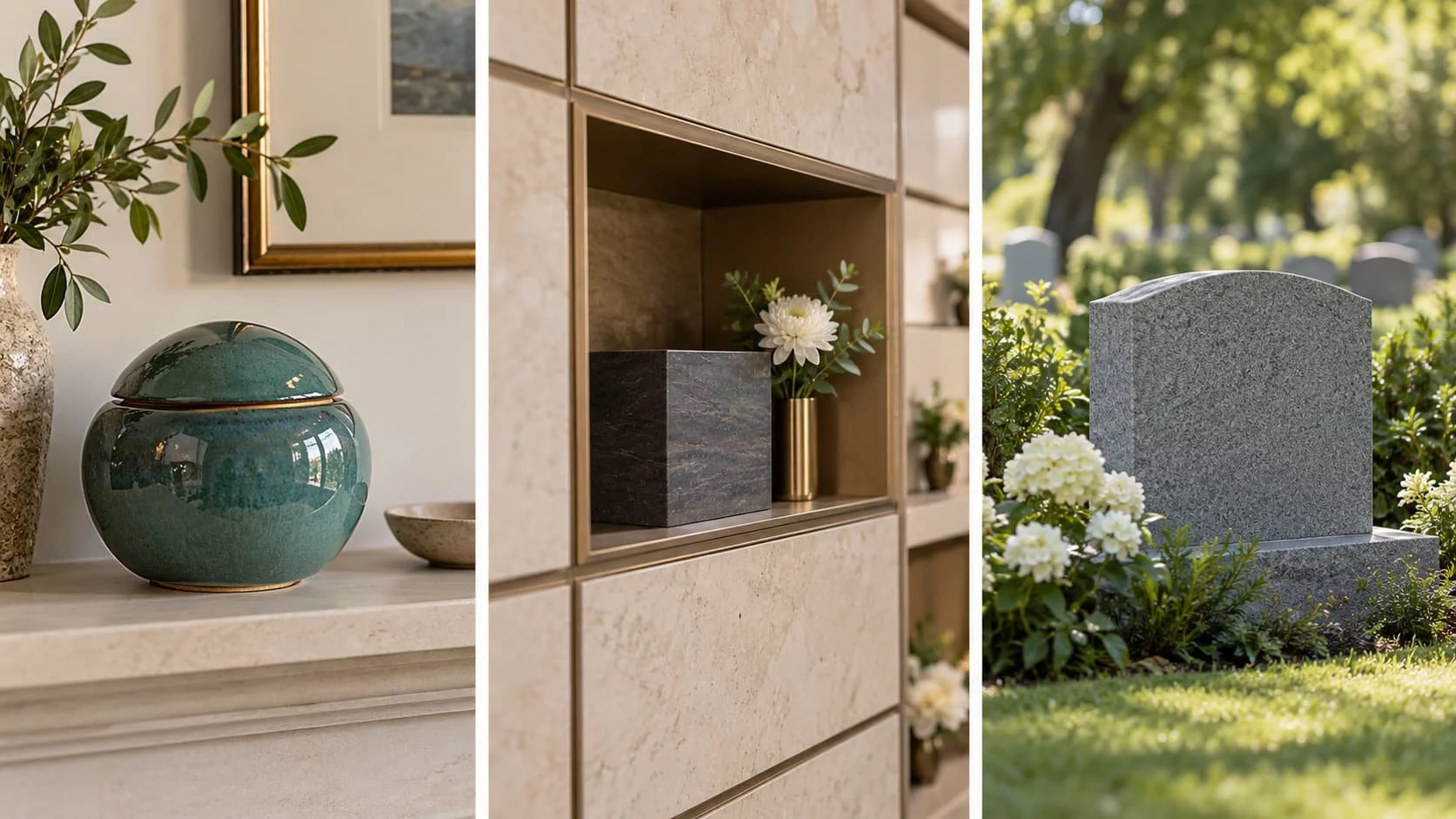
Maybe it’s been two years. Maybe it’s been ten.
Something has shifted, and you’re finally ready to decide what happens to the ashes that have been waiting patiently in their temporary container.
First: nothing about the waiting was wrong.
Second: you have more options than you probably realize, and this is all of them, honestly presented.
1. Keep them at home, in a permanent vessel
The simplest path. You choose an urn (or have one commissioned), the ashes are transferred (you can do it, or any funeral home or crematory will do it for you, usually free or nearly so), and the vessel lives where you live. Ready-made urns run from under $100 to several hundred dollars, and there are genuinely beautiful ones. Commissioned pieces, designed around the person, are the other end of the spectrum; that’s what I make, and it’s the right answer for some families and unnecessary for others.
What to check regardless of maker: capacity in cubic inches (the rule is one cubic inch per pound; 200 covers nearly any adult).
2. A columbarium niche
A columbarium is a wall or building of small niches, each holding one or more urns, usually at a cemetery or church. It gives the ashes a visitable address, which matters enormously to some families and not at all to others. Niches are purchased like plots; prices vary widely by city and setting. If different family members disagree about “keeping” versus “placing,” a niche is often the compromise that satisfies both instincts.
3. Burial
Cremated remains can be buried in a family plot (often several urns fit where one casket would), in a dedicated urn garden, or in a green cemetery in a biodegradable vessel. If your family already owns cemetery space, ask; many families don’t realize an existing plot can take urns.
4. Scattering
Legal in most places with permission: private land with the owner’s consent, many public lands with a permit, at sea beyond three nautical miles under federal rules. Rules vary by state and site, so check locally rather than relying on a blog, including this one.
Two things families rarely hear in advance: you can scatter some and keep some, and scattering is physical and windy and worth a moment of planning about who stands where.
5. Dividing among family
More than one in ten Americans now want their ashes shared among the people who loved them, and it’s legal and increasingly common. Any crematory or funeral home will divide remains into multiple containers. This is also the reason my urn sets exist: related vessels, one per household, so nobody keeps the cardboard box. This is, in fact, what we did with my dad’s ashes. (We scattered some in his beloved bamboo groves and then we split them up amongst my sisters, mom and I.)
6. A small amount, transformed
Keepsake pendants, glass with ashes incorporated, even vinyl records and reef balls. These use a tablespoon or less, so they combine with any option above. Quality varies wildly; read reviews with attention.
How to actually decide
Gather the people who share the loss and ask two questions: does anyone need a place to visit, and does anyone need something to keep? Visit-people point toward niches, burial, or scattering somewhere reachable. Keep-people point toward vessels, division, keepsakes. Most families contain both kinds of people, and most good answers combine two options.
There is no version of this where you get it wrong; the ashes will be exactly as safe whatever you choose.
