
How Long Can Ashes Stay in a Temporary Container? (Hint: There’s No Deadline)
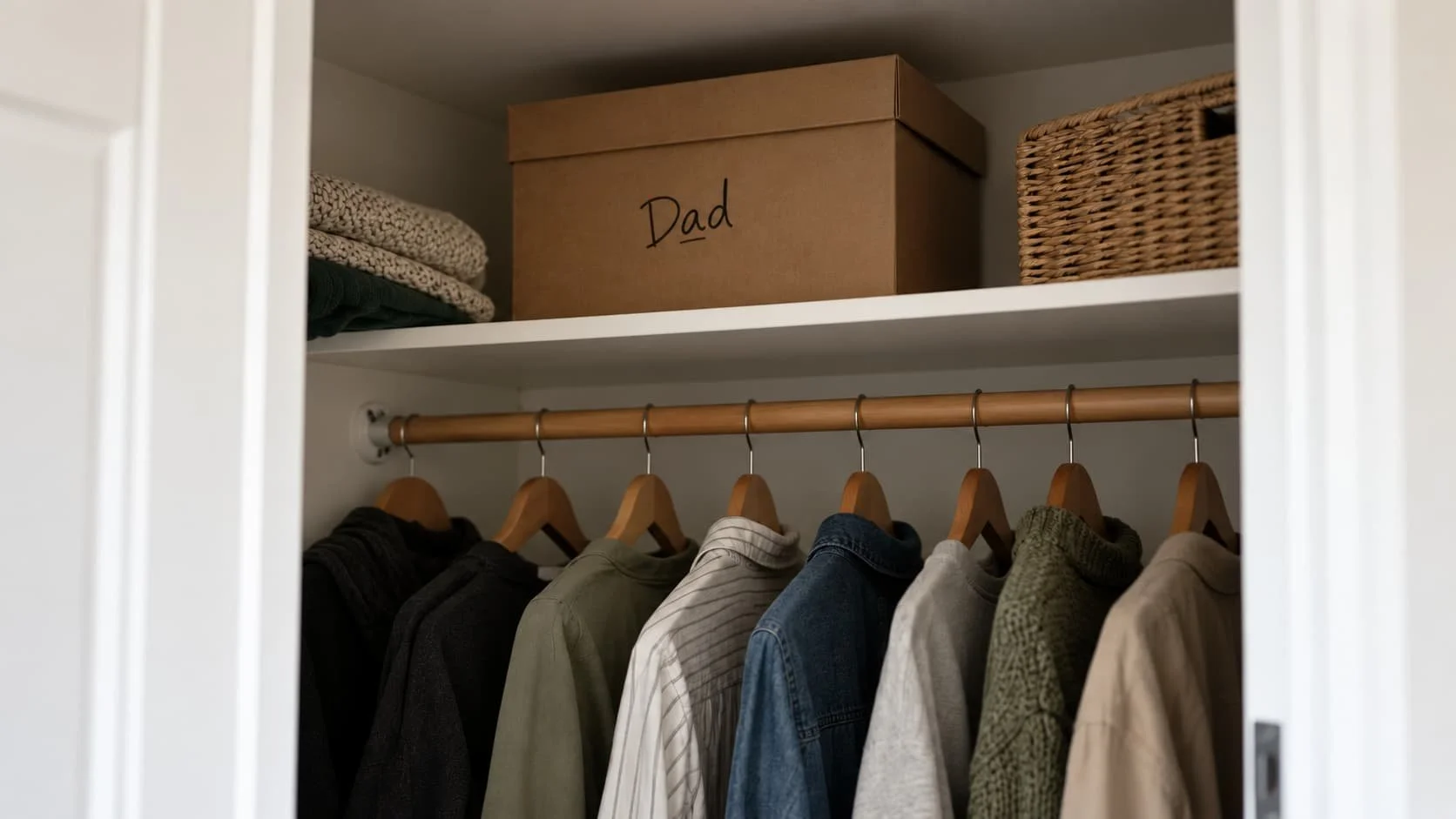
If you’re reading this, there’s probably a box somewhere in your home. Maybe it’s in a closet, or on a high shelf, or in the corner of a room you don’t use much. It came from the crematory, it’s made of plastic or cardboard, and it’s been there longer than you expected it to be.
Let me answer the question you actually searched, and then the question underneath it.
The factual answer
Cremated remains are completely stable. They do not decompose, expire, off-gas, or require any special storage conditions. They are essentially mineral: bone fragments processed to a coarse, sand-like consistency. Temperature and humidity will not damage them. The temporary container, unglamorous as it is, will protect them indefinitely.
There is no legal deadline either. No state requires you to move cremated remains out of the container they came in. You are not out of compliance with anything. There is no form you forgot to file. Promise.
So the answer is: as long as you need. Sometimes it’s months and sometimes it’s years. I’ve heard from people holding onto the ashes for over a decade in that temporary container, and the ashes were fine.
The question underneath
Most people searching this phrase aren’t worried about mineral stability. They’re worried that waiting means something about them. That a year of the box in the closet adds up to a verdict about how much they valued their person.
Here is what I’ve come to understand about why the box waits, and why that’s reasonable.
In the weeks after a death, there are a hundred decisions: the service, the paperwork, the accounts, the phone calls, the person’s belongings. Every one of those decisions has a deadline attached. Choosing a permanent vessel is the one decision that has no deadline at all. So it goes to the bottom of the list, correctly. It’s appropriate triage, not anything else.
Then time passes, and the decision changes shape. It stops being logistics and starts being meaning, and decisions about meaning deserve to be made slowly, thoughtfully, and with intention.
How to know when you’re ready
In my experience, there’s a recognizable signal, and it isn’t guilt. It’s the feeling of readiness to engage to complete the process, the way an unhung painting is unfinished. Not wrong. Just waiting. When the temporary box starts to feel like that, like a task you’re finally curious about rather than one you’re dreading, that’s usually the moment.
When it arrives, your options are wide open, and none of them are wrong: a ready-made urn chosen with care, a columbarium niche, burial, scattering where it’s permitted, dividing the ashes among family, or a commissioned piece designed around the person, just like I create.
And if the moment hasn’t yet arrived, close this tab without homework. The box is fine. The ashes are safe. There is no clock.
